
Living in a Flood Zone | Delaware & Maryland Waterfront Homes
Living in a Flood Zone: What Nearly 30 Years of Coastal Experience Has Taught Me
From king tides and nor'easters to thoughtful construction and everyday preparation, here's what firsthand waterfront ownership has taught me about living along the Delaware and Maryland coast.
By Neil Brosnahan | The Ashley Brosnahan Team | Long and Foster Real Estate
There's something extraordinary about living on the water.
Whether it's watching the sunrise over the Atlantic Ocean, enjoying an evening overlooking the bay, or stepping outside to your own private dock, waterfront living offers a lifestyle that's difficult to duplicate.
But it also comes with responsibilities that many people don't fully understand until they've experienced them firsthand.
I've spent nearly 30 years working in the home industry, much of that time designing, building, renovating, and maintaining oceanfront and bayfront homes. I also live directly on the waterfront in Fenwick Island, Delaware.
Over the years, I've learned what works, what doesn't, and how seemingly minor construction decisions can make an enormous difference when Mother Nature decides to remind us who's in charge.
One of the biggest misconceptions about waterfront real estate is that being located in a flood zone automatically makes a home undesirable.
I don't see it that way.
I believe the key is understanding the property, how it was constructed, how water behaves around it, and what you can do to prepare for the inevitable coastal weather event.
And recently, our own home provided a pretty remarkable example.
When Mother Nature Put Our Waterfront Home to the Test
Recently, our coastal neighborhood experienced an unusual combination of weather and tidal conditions.
We had what I like to call the perfect trifecta: king-tide conditions associated with a full moon, combined with a three-day nor'easter.
A full moon can produce particularly high astronomical tides, and persistent coastal winds can push additional water into bays, canals, and tidal waterways.
When these conditions come together, water levels can rise significantly.
And that's exactly what happened.
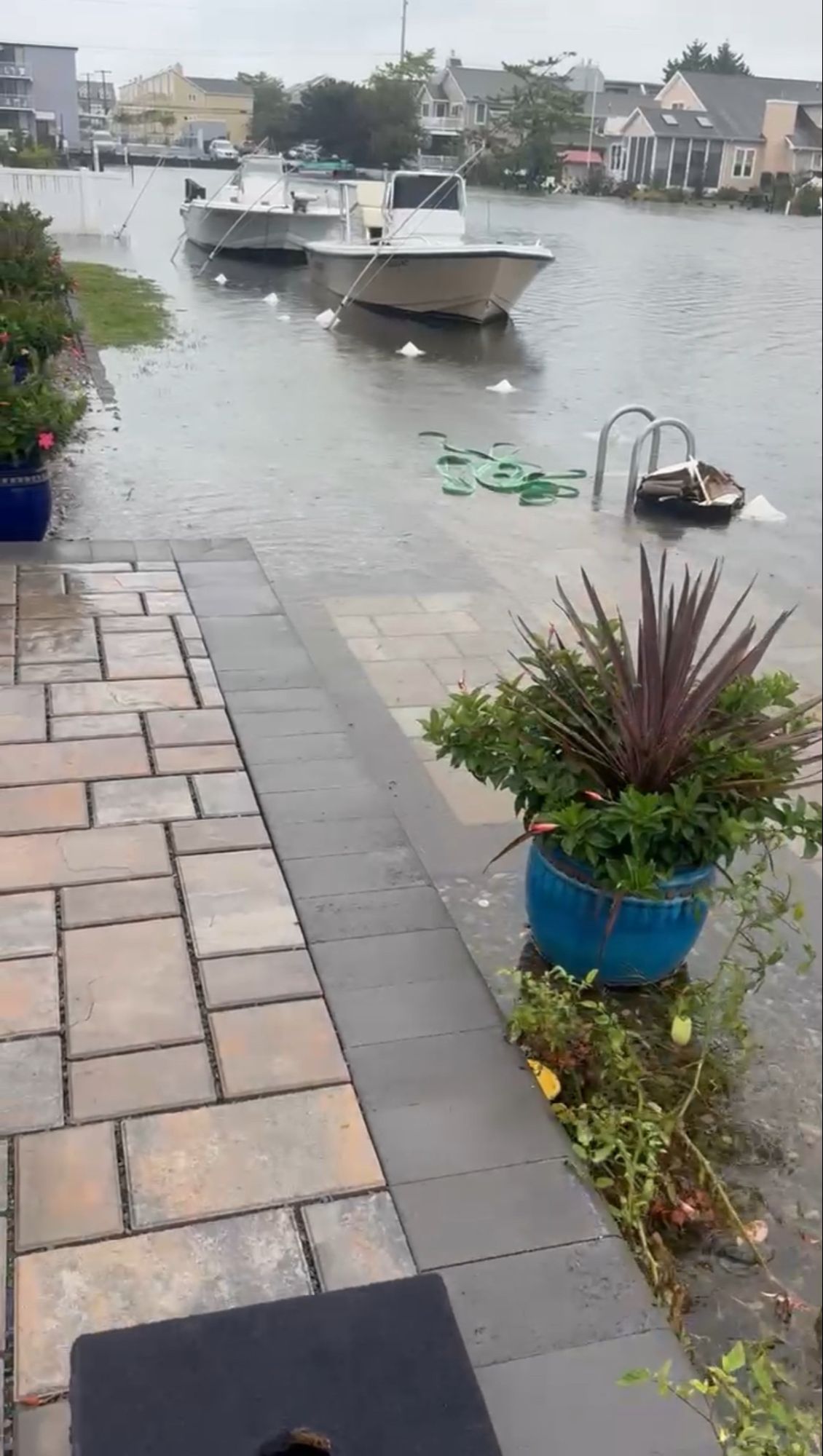
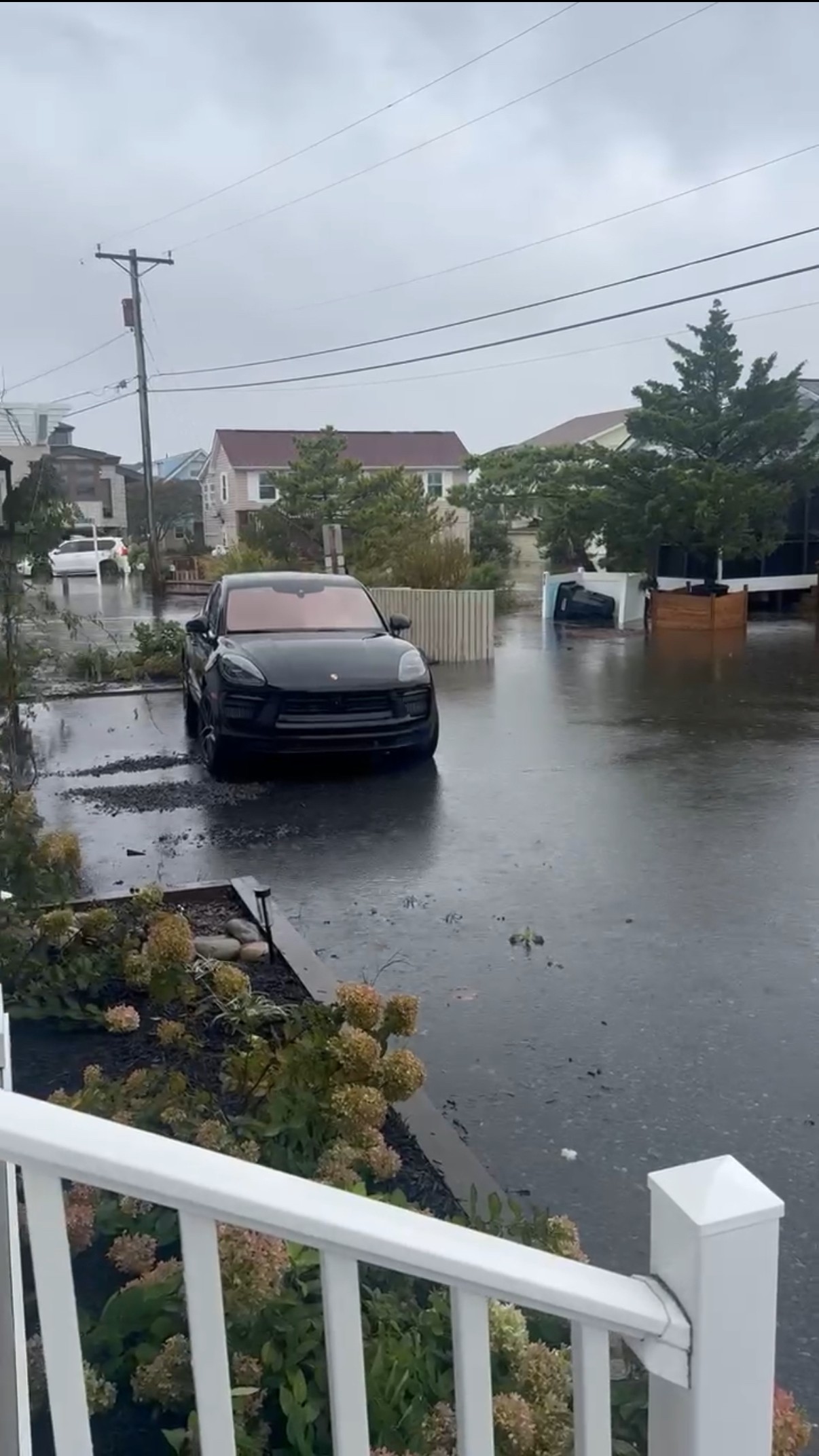
Bay water rose above our bulkhead and flowed into the backyard. The street flooded, and water surrounded portions of our property.
For a brief period, we essentially owned a home on our own private island.
Now, some people might find that terrifying. Having lived and worked around the water for so many years, I understood what was happening and why.
We had anticipated conditions like these when designing and renovating our property.
What interested me most wasn't just how high the water rose.
It was how a few intentional construction decisions helped protect areas of our home from that water.
One Step Made the Difference Between a Clean Pool and a Major Cleanup
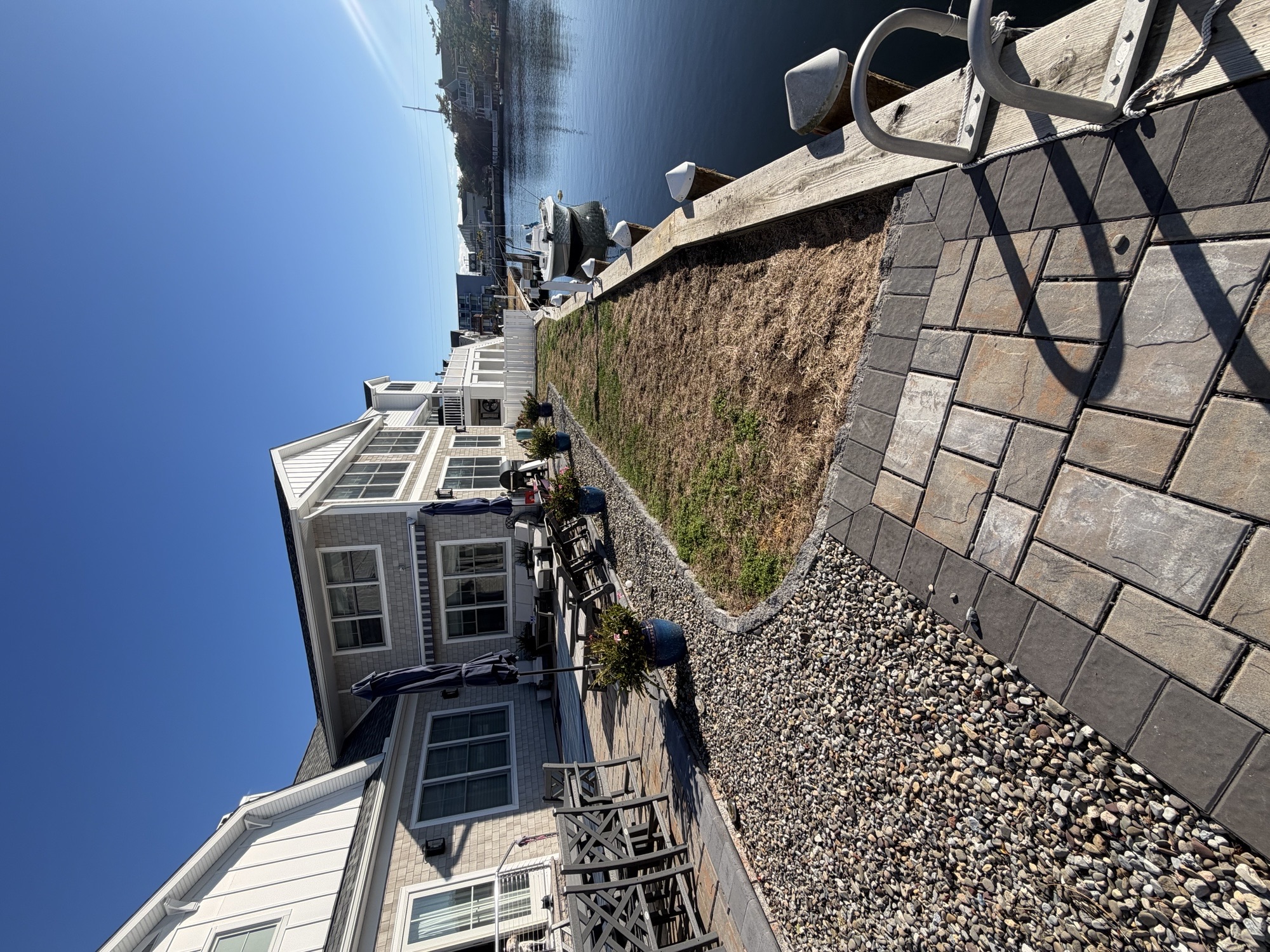
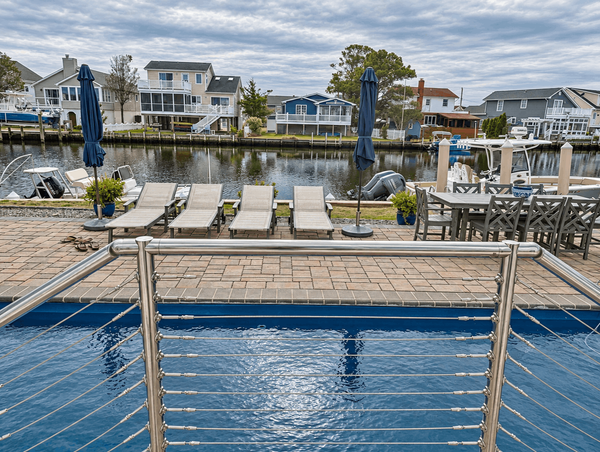
When we designed our backyard, we knew that during a major tidal event or coastal storm, bay water could potentially rise above the bulkhead.
So we incorporated a simple elevation change between the lower waterfront portion of the yard and the swimming pool area.
It's only one terraced step.
Nothing especially complicated or elaborate.
But its purpose was very deliberate: to provide additional elevation between rising tidal water and the swimming pool.
During our recent flooding event, water came over the bulkhead and covered the lower section of the yard.
But it didn't rise high enough to cross that step and enter the pool.
That meant we didn't spend the following day cleaning mud, crabs, minnows, and debris out of our swimming pool.
Instead, the pool remained clean and ready for swimming.
Think about that for a moment.
A single step, incorporated into the original design, made the difference between an ordinary day and what could have been a substantial cleanup.
Sometimes the smartest construction decisions aren't the most expensive ones. They're the ones made by understanding what might happen before it happens.
We Turned Our Pool Deck and Walkways Into a Drainage System
Another important feature of our property is something most visitors would probably never recognize as a significant construction decision.
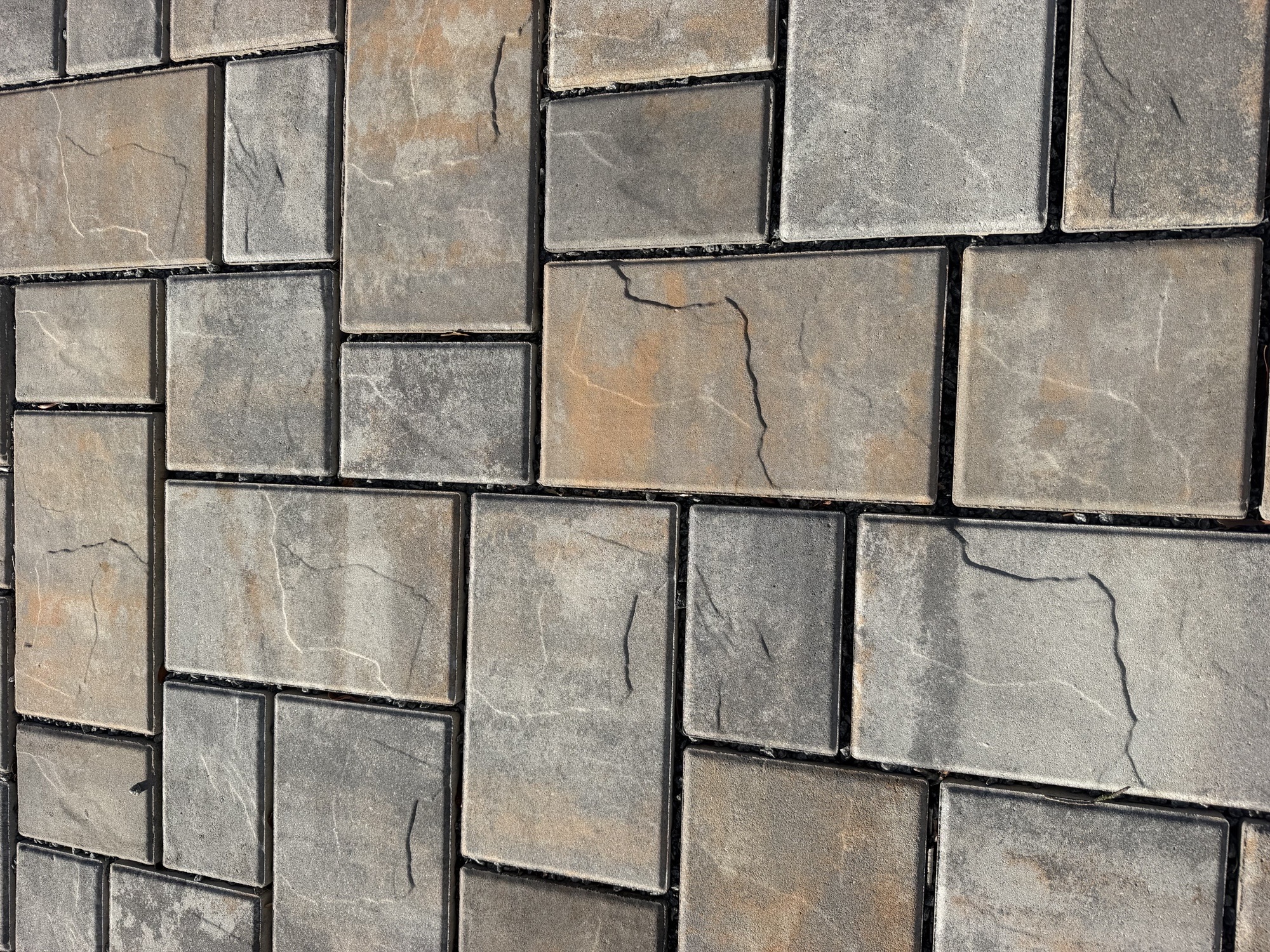
Our pool deck and walkways are constructed using permeable pavers installed over an extensive stone-bed drainage system.
We didn't want large areas of conventional impervious paving that would simply collect rainwater or send additional runoff across the property.
We wanted the paved surfaces themselves to contribute to stormwater management.
With our design, rainwater can pass through the permeable paver joints into the specially constructed stone drainage bed beneath.
The spaces between the stones provide room for water to collect temporarily and move through the system, with infiltration dependent on the surrounding ground conditions.
In other words, instead of relying solely on isolated surface drains, we created a distributed drainage area across the pool deck and walkways.
From above, it looks like an attractive outdoor living space.
Underneath, it's part of our property's drainage infrastructure.
And that distinction matters.
The permeable paving system was designed primarily to manage rainfall and surface runoff. It's not a barrier against tidal flooding, and its drainage performance can be reduced when the ground is saturated or tidal groundwater is elevated.
The terraced elevation helped keep tidal water away from the pool, while the paving and stone-bed system help manage stormwater under suitable conditions.
Two different water-management challenges, addressed through two different construction decisions that work together as part of the overall property design.
That's an important part of coastal construction that often goes unnoticed.
It's not just about building a beautiful home. It's about understanding how the entire property functions.
A Slightly Elevated Garage Floor Made Another Big Difference
We applied the same philosophy when designing our garage.
Knowing that unusually high tidal water could eventually affect the property, we made the decision to elevate the garage floor slightly.
Again, it wasn't a dramatic change.
It was a relatively modest adjustment made intentionally because of our waterfront location.
When water covered the street and surrounded portions of the home, that additional garage elevation helped prevent tidal water from entering.
Anyone who's experienced saltwater intrusion understands the potential consequences.
Floodwater can damage stored belongings, building materials, electrical equipment, and mechanical components. Saltwater can also accelerate corrosion long after the visible water has receded.
By keeping water out of the garage during this event, we avoided those immediate problems.
The interesting part is that we didn't make these decisions after experiencing a flood.
We anticipated the possibility during construction, designed around it, and eventually experienced an event that demonstrated why those choices mattered.
No design feature guarantees protection against every possible storm or flood. More extreme water levels could produce a different outcome.
But this event reinforced something I've believed for years: good coastal construction begins with understanding the environment.
Learn to Watch the Weather, Not Just the Forecast
Here's another lesson that I believe every waterfront homeowner should understand.
You don't have to become a meteorologist. But you should learn to recognize the weather and tidal conditions that have the potential to affect your property.
Most people check the forecast to see whether it's going to rain or whether the weekend will be nice.
When you live on the water, you start paying attention to a few additional things.
Wind direction. Wind duration. Tidal predictions. Full and new moons. Approaching coastal storms.
These factors can provide valuable clues about when water levels might rise.
For example, sustained winds blowing toward shore can push water into certain bays and tidal waterways.
Sometimes the duration of those winds is just as important as their strength.
A prolonged nor'easter can cause water to accumulate in coastal areas, and in some locations, delay the normal movement of water out of bays and canals.
At the same time, full and new moons create stronger tidal ranges. Particularly high astronomical tides, often called king tides, can become more concerning when they coincide with persistent coastal winds and storm conditions.
Our recent flooding event was an excellent example of what happens when those factors overlap.
Every Waterway Behaves Differently
One of the things I've learned from waterfront ownership is that different canals and bays can react differently to the same weather event.
The direction of the wind, the shape of the bay, the orientation of the canal, and the surrounding geography can all influence how water moves.
A wind direction that produces unusually high water at one property may have a different effect somewhere else.
That's why it's important to learn how your particular waterfront location responds to different conditions.
Pay attention to the tides. Watch the wind. Become familiar with coastal flood advisories and warnings.
Over time, you'll begin recognizing the combinations of conditions that deserve additional attention.
That knowledge gives you an opportunity to prepare.
Perhaps that means moving vehicles to higher ground, securing outdoor furniture, checking drainage systems, or protecting vulnerable equipment.
And if authorities issue evacuation instructions, personal safety always comes first.
You don't need a degree in meteorology to become a more informed waterfront homeowner.
You just need to develop an awareness of the environment you chose to live in.
Two excellent resources are NOAA Tides & Currents for water-level observations and tide predictions, and the National Weather Service for coastal flood forecasts and alerts.
Not All Flood Zones — or Waterfront Homes — Are Created Equal
When buyers discover that a property is located in a FEMA-designated flood zone, their first reaction is often concern.
Will the house flood? How much will flood insurance cost? Is the property safe? Will the flood zone affect its future value?
All reasonable questions.
But I think it's important to recognize that two homes located in the same flood zone can perform very differently.
One property may have appropriately elevated living spaces, well-protected mechanical equipment, thoughtful drainage, and construction suited to its location.
Another property may have vulnerable utilities, low-lying finished areas, or a history of water intrusion.
That's why I never evaluate waterfront property solely by its flood-zone designation.
Understanding AE, VE, and X Flood Zones
Along the Delaware and Maryland coast, buyers frequently encounter several FEMA flood-zone classifications.
Zone AE identifies a high-risk flood area with an established base flood elevation.
Zone VE identifies a coastal high-hazard area where flooding can involve additional hazards from storm-induced waves.
Zone X generally identifies areas with moderate or minimal mapped flood risk, depending on the designation. Being located in Zone X doesn't mean that flooding is impossible.
It's also important to understand the elevation of the structure itself, not simply the flood zone shown on a map.
The lowest floor elevation, applicable flood elevation, construction methods, drainage, and previous flood history can all provide important information.
And remember, the commonly used term “100-year flood” doesn't mean flooding happens only once every hundred years. It refers to a flood level with a 1% chance of being equaled or exceeded in any given year.
Good Coastal Construction Is About More Than Expensive Materials
One of the greatest advantages of my construction background is understanding what goes into a home beyond the finishes that buyers see.
When evaluating an oceanfront or bayfront property, I'm paying attention to foundations, elevations, drainage, windows, doors, exterior materials, fasteners, decks, and mechanical systems.
Salt air accelerates corrosion.
Wind-driven rain can expose weaknesses in exterior assemblies.
Moisture and flooding can damage materials that weren't selected or installed for their intended environment.
I've seen expensive materials fail because they were used in the wrong application. I've also seen relatively affordable materials perform exceptionally well because someone understood how and where to use them.
That's why I've never believed that luxury is simply a matter of spending the most money.
True luxury involves thoughtful design, quality construction, durability, and understanding where your investment makes the greatest difference.
Our own backyard is a good example.
The terraced step, permeable pavers, stone drainage bed, and elevated garage weren't decorative upgrades.
They were practical decisions built into the overall design.
And during a significant coastal flooding event, several of those decisions helped us avoid problems.
Understanding the True Cost and Value of Waterfront Property
When considering a waterfront home, flood insurance is important, but it's far from the only consideration.
Buyers should understand the potential maintenance expenses associated with coastal exposure, including exterior finishes, mechanical equipment, decks, docks, bulkheads, and drainage systems.
Standard homeowners insurance generally doesn't cover flood damage, so separate flood coverage and any applicable lender requirements should be evaluated carefully.
Construction quality and condition can also have a significant effect on long-term ownership costs.
Two similarly priced waterfront homes can have very different maintenance needs and risks.
One may have thoughtful elevation, quality coastal materials, and well-maintained infrastructure.
Another may have attractive finishes but significant underlying construction vulnerabilities.
Those differences aren't always obvious during a showing.
And they can influence what a home is truly worth.
When evaluating a waterfront property, I want to understand the condition of the structure, its history with water, the elevation of vulnerable components, and whether previous improvements were appropriate for its location.
Older homes deserve particular attention, especially when major renovations are being considered. Floodplain regulations and building requirements may affect what improvements can be made and how they must be constructed.
The value of a waterfront home goes well beyond square footage, bedrooms, and bathrooms.
Flood exposure is just one of the factors that can influence the value of a coastal property. For a deeper look at how location, construction quality, water access, and waterfront expertise contribute to market value, read our article, What Makes a Waterfront Home Truly Valuable?
Knowing what you're looking at can be every bit as important as knowing what you're looking for.
Why I Still Love Living on the Water
After discussing flood zones, storms, construction, and maintenance, I think it's important to remember why so many of us choose to live along the coast in the first place.
There's simply nothing quite like it.
I've had the opportunity to design and build some extraordinary oceanfront homes over the years.
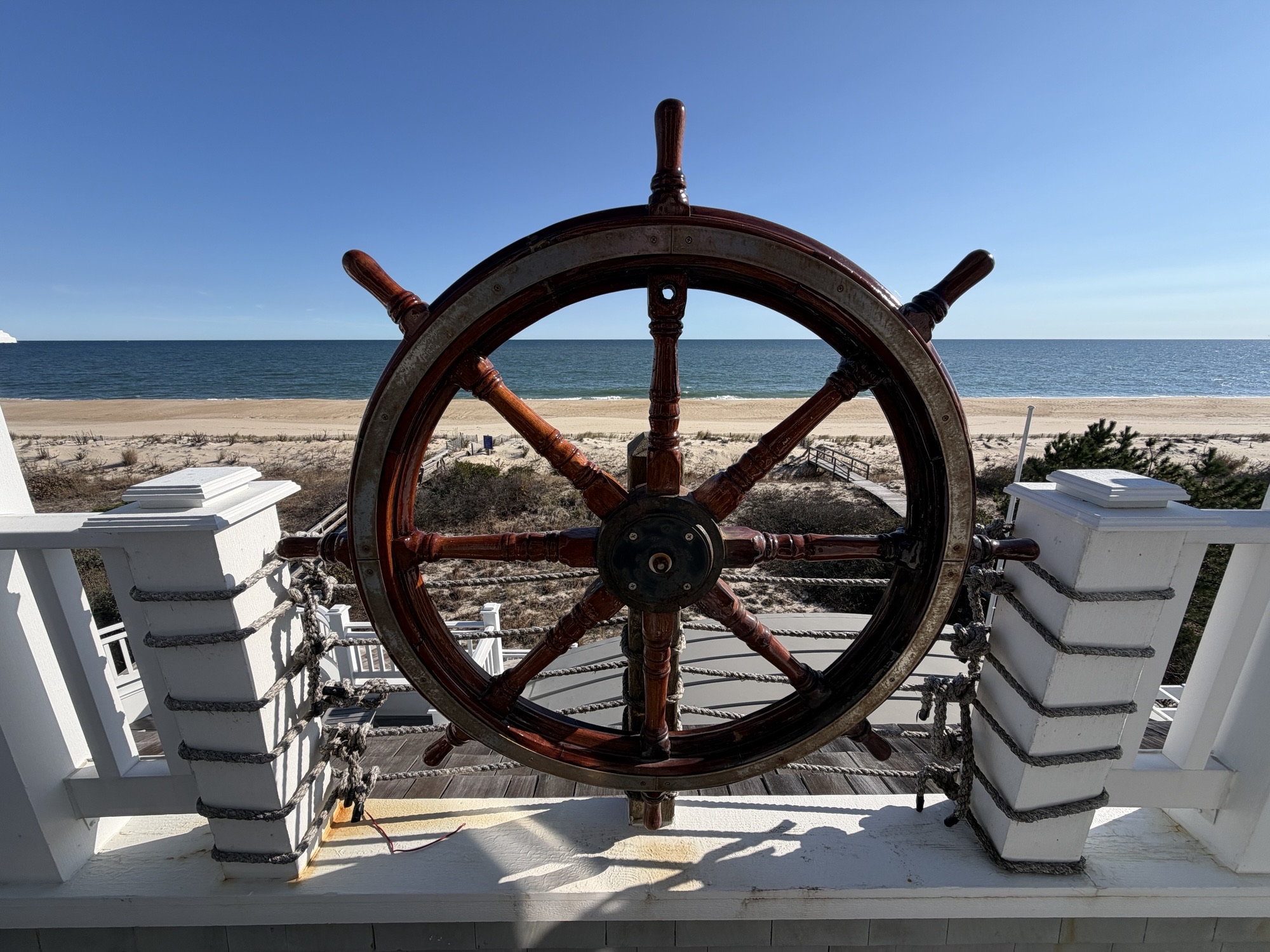
One particularly memorable project featured an authentic ship's wheel salvaged from a historic Liberty ship.
We purchased it from a nautical history store in California and incorporated it into the fourth-floor oceanfront deck of a home we built.
Standing behind that wheel, looking out across the Atlantic, creates the sensation that you're steering the entire house out to sea.
It's a remarkable feature, and one that perfectly captures the character and enjoyment of coastal living.
To me, that's what great waterfront home design is all about.
Creating something special that embraces its surroundings while respecting the forces of nature that come with them.
I love living on the water.
And after nearly three decades of working with coastal homes, I also understand the importance of doing it intelligently.
Experience Matters When Buying or Selling Waterfront Real Estate
Living in a flood zone doesn't have to be intimidating.
But it does require understanding the property, the environment, and the responsibilities that come with waterfront ownership.
Learn how your local waterway responds to weather.
Understand the elevation and construction of your home.
Pay attention to flood forecasts and tidal conditions.
And when building or renovating, consider how the decisions you make today might protect your property years down the road.
I've spent nearly 30 years designing, building, renovating, and maintaining coastal homes. I've also experienced firsthand what happens when unusual weather and tidal conditions combine around my own property.
That experience gives me a perspective that goes beyond simply evaluating a real estate listing.
At the Ashley Brosnahan Team | Long & Foster Real Estate, we combine extensive coastal property experience with local market knowledge to help buyers and sellers make informed decisions throughout Bethany Beach, Fenwick Island, Ocean View, Ocean City, and the surrounding Delaware and Maryland communities.
Because waterfront living is about much more than the view.
It's about understanding the home, respecting the water, and knowing how to enjoy the extraordinary lifestyle that comes with both.
Considering Selling Your Waterfront Home?
Construction quality, elevation, flood exposure, water access, and property condition can all influence the market value of waterfront real estate.
If you're considering selling, we'd welcome the opportunity to help you understand what makes your property unique.
Discover What Makes Your Waterfront Home Truly Valuable
Ashley Brosnahan Team | Long & Foster Real Estate
The experiences described are specific to the property and flooding event discussed. They do not guarantee protection from future flooding. This article is educational and does not replace property-specific advice from qualified construction, engineering, insurance, or floodplain professionals.
Categories
Recent Posts





Delaware Associate Broker, Maryland Licensed Realtor RS-RA-0031206
+1(302) 841-4200 | ashley@bethanybeach-homes.com